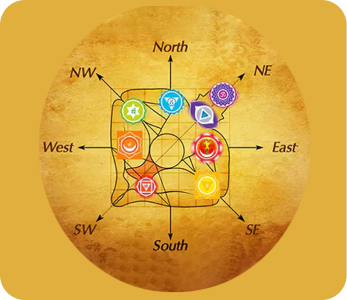
Property Usage & Objective Understanding
Involves a detailed assessment of spatial allocation, occupancy patterns, and operational intent to ensure every area serves a defined purpose. It bridges the gap between current utilization and desired outcomes, improving efficiency, value, and performance.
Energy and Directional Analysis
Examines spatial orientation, natural elements, circulation pathways, and behavioral movement to understand how energy flows within the environment. This helps enhance comfort, productivity, and psychological balance while optimizing environmental advantages.
Identification of Resistance Points
Focuses on detecting structural, functional, or perceptual barriers that limit performance or create discomfort. By resolving congestion, misalignment, or design conflicts, the space becomes more fluid and purpose-driven.
Strategic Alignment Guidance
Provides structured recommendations that align spatial design with strategic goals, whether personal, commercial, or developmental. Ensures the property actively supports growth, stability, and long-term sustainability.
Delivers step-by-step execution planning, resource coordination, and progress monitoring to translate strategy into measurable results. Ensures changes are practical, cost-effective, and successfully integrated.